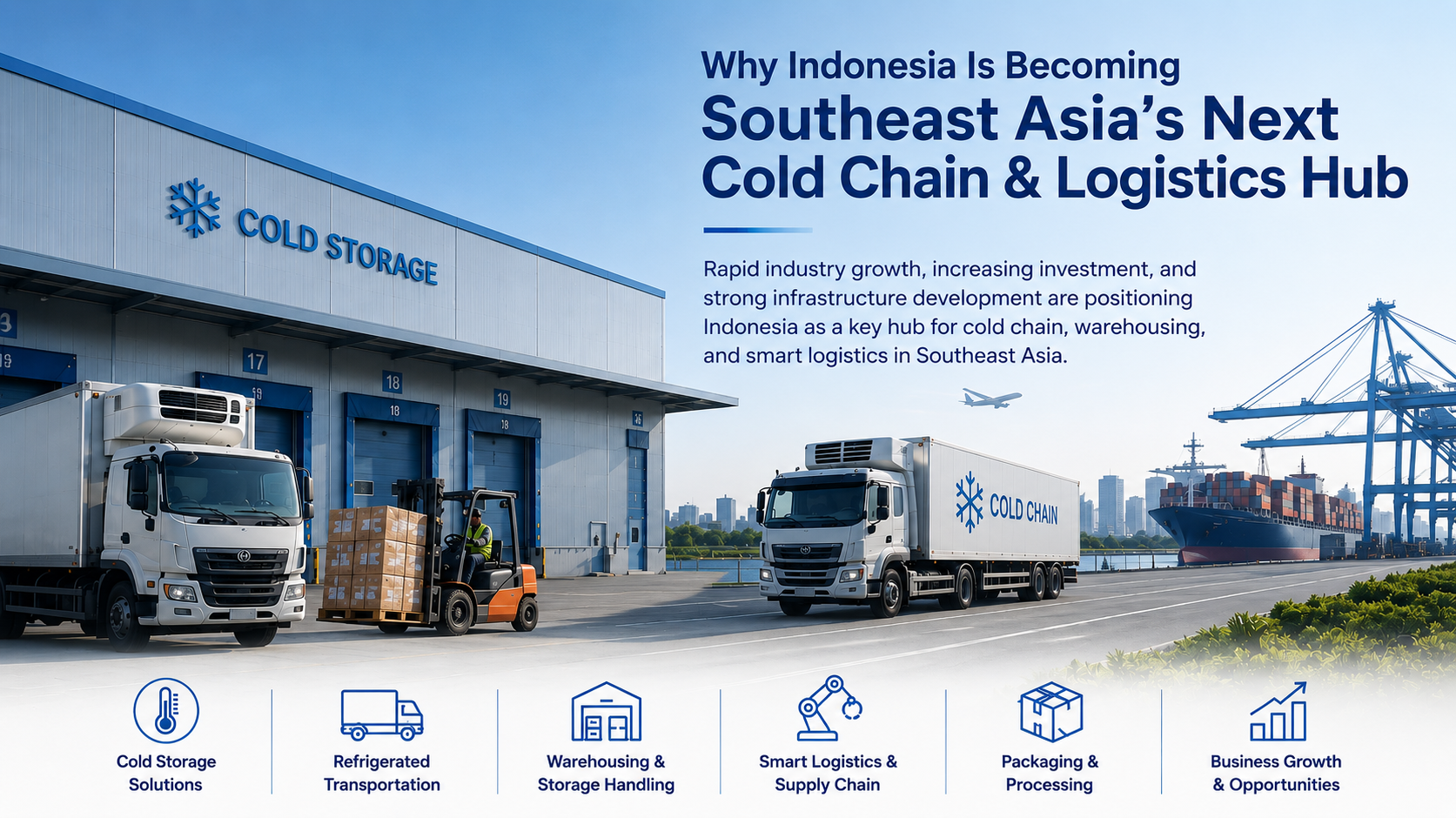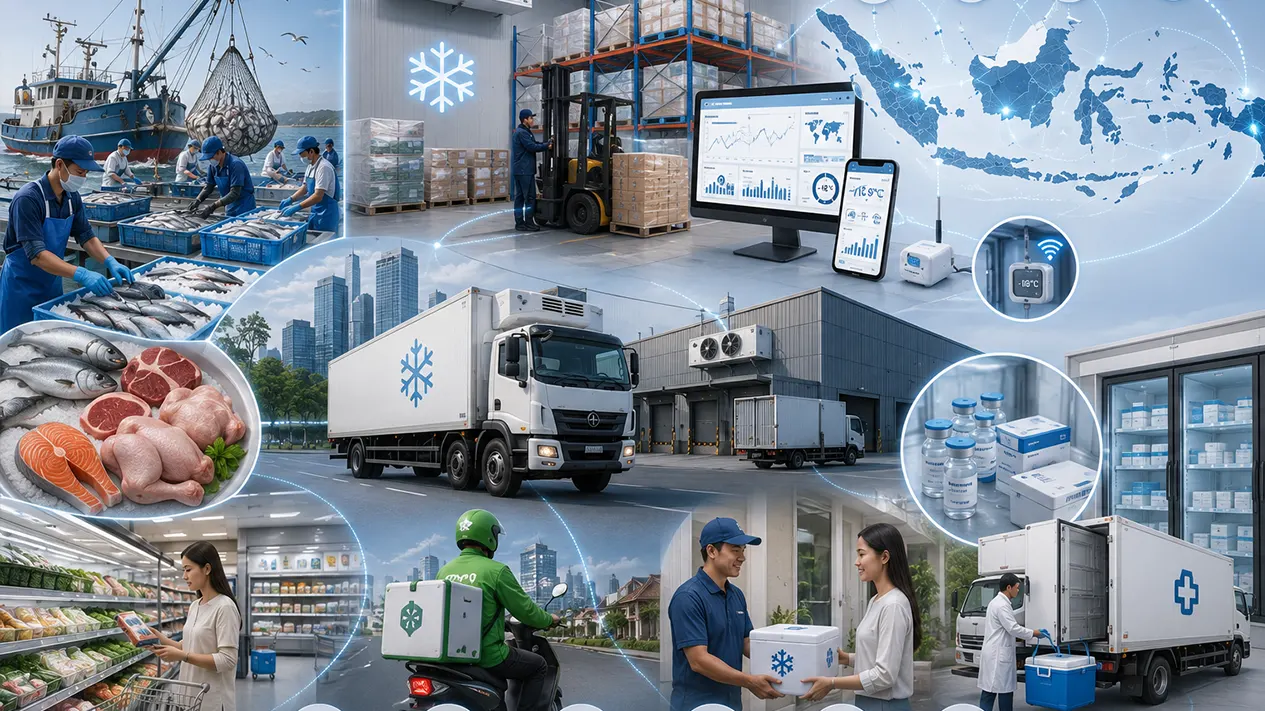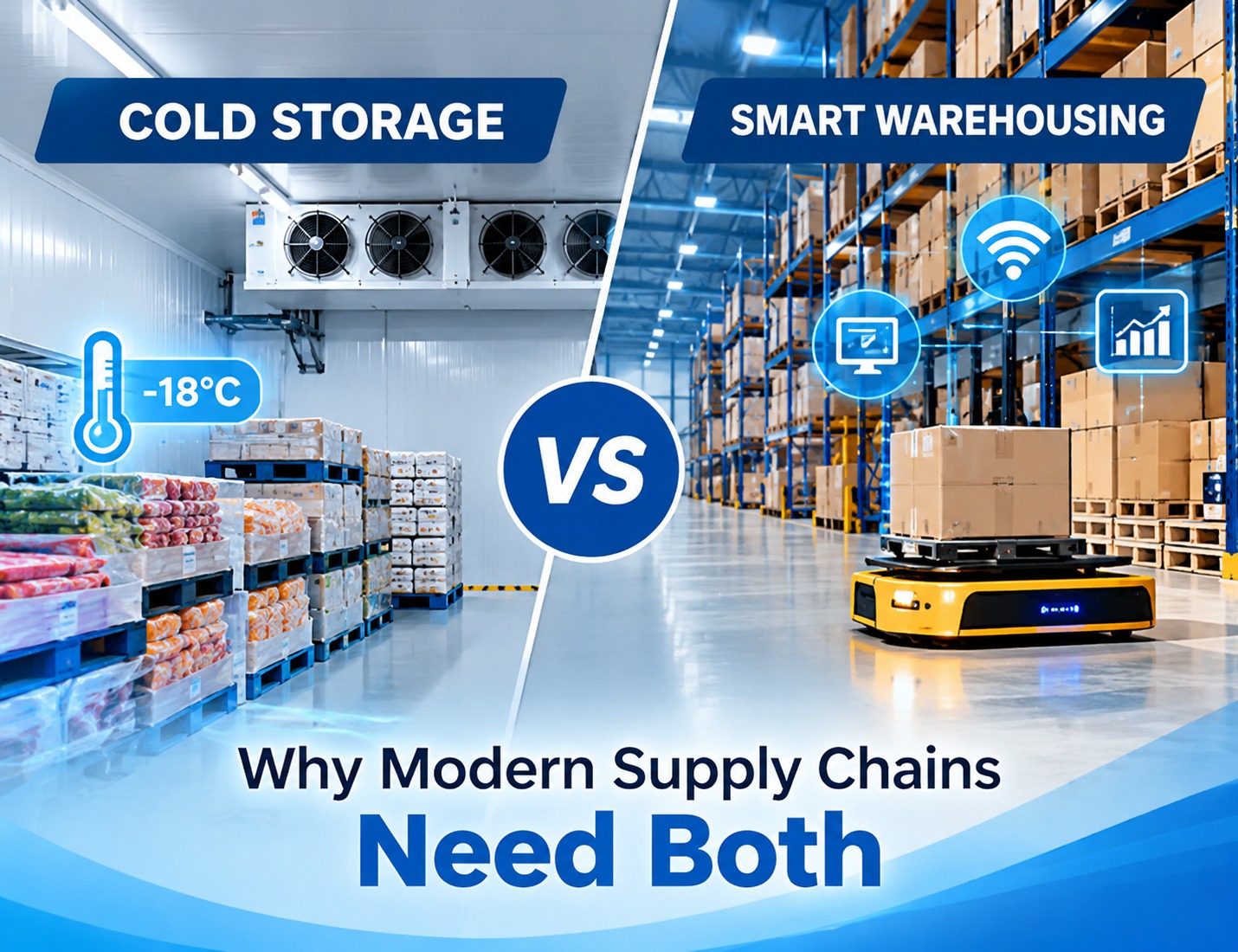
As supply chains become increasingly complex, businesses are looking beyond traditional storage and transportation methods to improve efficiency, product quality, and customer satisfaction. Across industries such as food and beverage, pharmaceuticals, manufacturing, retail, and e-commerce, companies are investing in both cold storage and smart warehousing to build more resilient and efficient operations.
Although these two terms are often used together, they serve different purposes within the supply chain. Understanding the differences—and how they complement one another—is essential for businesses planning future investments in logistics infrastructure.
In Indonesia, where demand for modern logistics continues to grow, integrating cold chain technology with warehouse automation is becoming a competitive advantage for companies seeking to improve operational performance.
What Is Cold Storage?
Cold storage refers to temperature-controlled facilities specifically designed to preserve products that require strict environmental conditions during storage.
Unlike conventional warehouses, cold storage facilities maintain consistent temperatures to ensure product quality, safety, and regulatory compliance.
Cold storage is widely used for:
- Frozen food
- Fresh seafood
- Meat and poultry
- Dairy products
- Fruits and vegetables
- Vaccines
- Pharmaceuticals
- Chemicals
- Temperature-sensitive medical products
Modern Cold Storage Indonesia facilities increasingly incorporate advanced refrigeration technology, energy-efficient cooling systems, and digital monitoring solutions to reduce product loss while improving operational efficiency.
What Is Smart Warehousing?
A smart warehouse combines physical storage with advanced digital technologies that automate warehouse operations and improve inventory management.
Instead of relying heavily on manual processes, smart warehouses use connected technologies to optimize every stage of warehouse operations.
Common technologies include:
- Warehouse Management Systems (WMS)
- Automated Storage and Retrieval Systems (AS/RS)
- Robotics and Autonomous Mobile Robots (AMR)
- Conveyor and sorting systems
- RFID technology
- Barcode scanning
- Internet of Things (IoT) sensors
- Artificial Intelligence (AI)
- Predictive analytics
These technologies allow businesses to improve inventory accuracy, reduce picking errors, shorten delivery times, and maximize warehouse space utilization.
Cold Storage and Smart Warehousing: What's the Difference?
Although both facilities store products, their primary objectives are different.
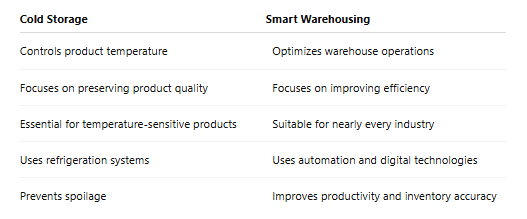
Today, many businesses are combining both approaches by developing temperature-controlled smart warehouses that integrate refrigeration systems with warehouse automation.
This combination allows businesses to protect product quality while simultaneously increasing operational efficiency.
Why Integration Matters
The future of supply chain management is no longer about choosing between cold storage and warehouse automation.
Instead, successful businesses integrate both systems to create end-to-end visibility across their operations.
Benefits include:
Better Product Quality
Continuous temperature monitoring helps ensure sensitive products remain within safe conditions throughout storage and distribution.
Faster Order Fulfillment
Automation significantly reduces order processing times while improving picking accuracy.
Lower Operating Costs
Smart warehouse technologies optimize labor utilization, warehouse space, and inventory levels while reducing unnecessary operational expenses.
Improved Traceability
IoT sensors, RFID technology, and digital tracking systems provide real-time visibility throughout the supply chain.
Regulatory Compliance
Food safety and pharmaceutical industries require accurate monitoring, documentation, and traceability, making integrated digital systems increasingly valuable.
Industries Driving Demand in Indonesia
Indonesia's expanding economy is accelerating investment in both cold chain infrastructure and warehouse automation.
Several industries are leading this transformation.
Food and Beverage Manufacturing
Growing consumer demand for fresh and frozen products requires reliable cold storage combined with efficient warehouse operations.
Seafood and Meat Processing
Indonesia's seafood exports depend on maintaining strict temperature control from processing facilities to international markets.
Pharmaceutical Industry
Vaccines, biologics, and medical products require highly controlled storage environments supported by real-time monitoring technologies.
Retail and Supermarkets
Modern retail chains increasingly rely on automated distribution centers capable of handling large product volumes while maintaining inventory accuracy.
E-commerce
Rapid delivery expectations are driving investment in automated fulfillment centers equipped with smart logistics technologies.
Manufacturing
Manufacturers are implementing warehouse automation to improve inventory visibility and support just-in-time production strategies.
Emerging Technologies Transforming Modern Warehouses
The evolution of Smart Logistics Indonesia is introducing technologies that were once considered futuristic.
Some of the fastest-growing innovations include:
- AI-powered warehouse optimization
- Digital twin technology
- Autonomous forklifts
- Automated Guided Vehicles (AGVs)
- Drone inventory inspection
- Predictive maintenance
- Energy-efficient refrigeration systems
- Cloud-based Warehouse Management Systems
- Real-time IoT monitoring
- Data analytics dashboard
Together, these technologies improve productivity while supporting sustainability initiatives through lower energy consumption and reduced product waste.
Why This Matters for Businesses
Companies investing in modern logistics infrastructure are not simply purchasing equipment—they are strengthening their long-term competitiveness.
Integrated cold storage and smart warehousing enable businesses to:
- Increase customer satisfaction
- Reduce inventory losses
- Improve product quality
- Expand distribution capacity
- Strengthen supply chain resilience
- Support business growth
- Meet increasingly strict regulatory requirements
As Indonesia continues investing in logistics infrastructure, companies adopting these technologies early will be better positioned to capitalize on future market opportunities.
Discover the Future of Integrated Supply Chain Solutions
The rapid evolution of Indonesia's supply chain ecosystem is creating new opportunities for businesses across cold storage, warehousing, logistics, automation, and digital technology.
IISM & Indonesia Cold Chain Expo 2027, held alongside Warehousing & Storage Handling Indonesia and Indonesia Smart Logistics & Supply Chain Expo, provides a dedicated platform where industry professionals can explore the latest innovations, connect with qualified buyers, and build strategic partnerships.
Whether your business specializes in refrigeration, warehouse automation, material handling, logistics software, or smart supply chain technologies, the exhibition brings together the complete ecosystem driving Indonesia's next phase of industrial growth.
Join technology providers, manufacturers, logistics operators, distributors, project owners, investors, and supply chain decision-makers shaping the future of Indonesia's integrated logistics industry.
Frequently Asked Questions (FAQ)
Is cold storage the same as a warehouse?
No. Cold storage is a temperature-controlled facility designed to preserve sensitive products, while a warehouse is primarily used for storing and distributing goods. Smart warehouses incorporate automation and digital technologies to improve operational efficiency.
Can a warehouse also be a cold storage facility?
Yes. Many modern logistics facilities integrate refrigeration systems with warehouse automation, creating temperature-controlled smart warehouses capable of handling food, pharmaceutical, and other sensitive products.
Which industries benefit most from smart warehousing?
Food and beverage, pharmaceuticals, manufacturing, retail, e-commerce, seafood processing, logistics providers, and cold chain operators all benefit from warehouse automation and digital inventory management.
Why is warehouse automation becoming more important?
Warehouse automation helps businesses improve inventory accuracy, reduce operational costs, accelerate order fulfillment, and respond more efficiently to increasing customer demand.